Journey South to the Temples of Abu Simbel Day Tour
Travel about 280 km south from Aswan to the Abu Simbel Temples, where two mammoth temples rise from the Nubian landscape. Carved into Nubian rock during the reign of Ramses II, the site features colossal royal statues, sacred chambers, vivid battle reliefs, and the elegant Temple of Hathor dedicated to Queen Nefertari. Explore both temples and learn about their relocation and how an international UNESCO campaign saved them from the rising waters of Lake Nasser after the Aswan High Dam was built.
Your day
Early morning, pickup from your hotel or cruise (you choose the time when booking; most guests leave between 4:00 and 5:00 AM to arrive before the heat and the crowds). About 3.5 hours through the Western Desert. Around 2 hours at the temples with your private Egyptologist, then free time for photos. Drive back and drop-off in Aswan in the early afternoon.
Twice a year, on 22 February and 22 October, the rising sun reaches the back of the Great Temple in a remarkable solar phenomenon that illuminates the inner sanctuary. Wherever you’re staying in Egypt, we can arrange your journey to Abu Simbel, from a private day trip to a tailor-made Egypt tour package. Contact us to plan your trip around this remarkable solar phenomenon!
Tour highlights
What makes this day different
Abu Simbel Temples
Ramses II's monumental temples, carved into the mountainside.
Your guide transfers you from Aswan in a private air-conditioned vehicle after breakfast.
1
Great Temple of Ramses II
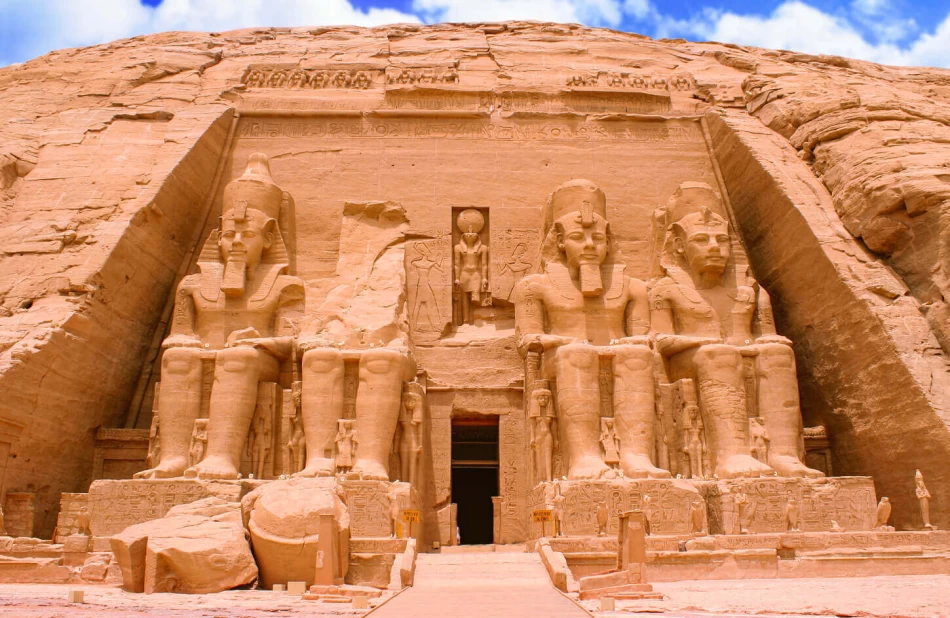
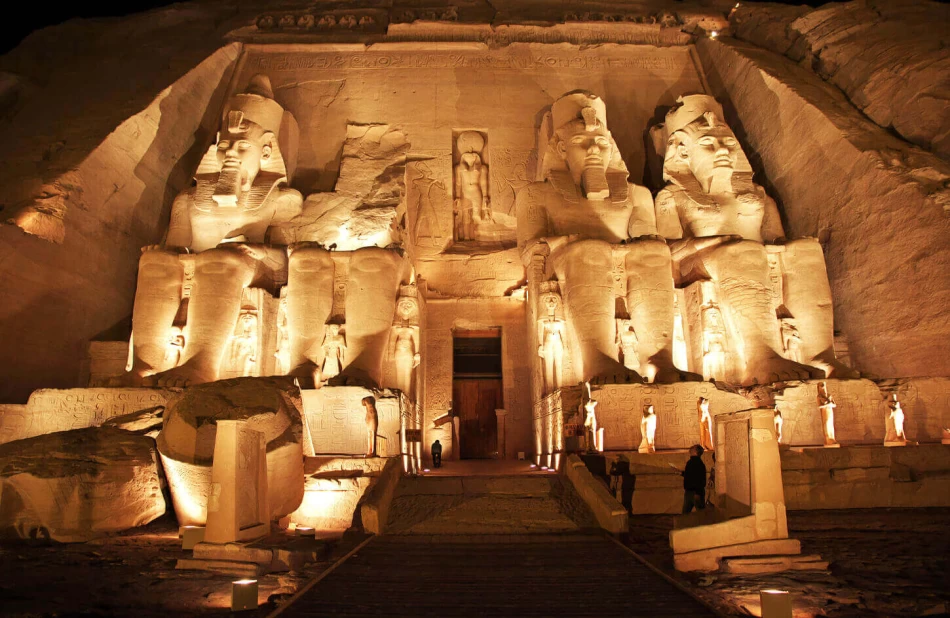
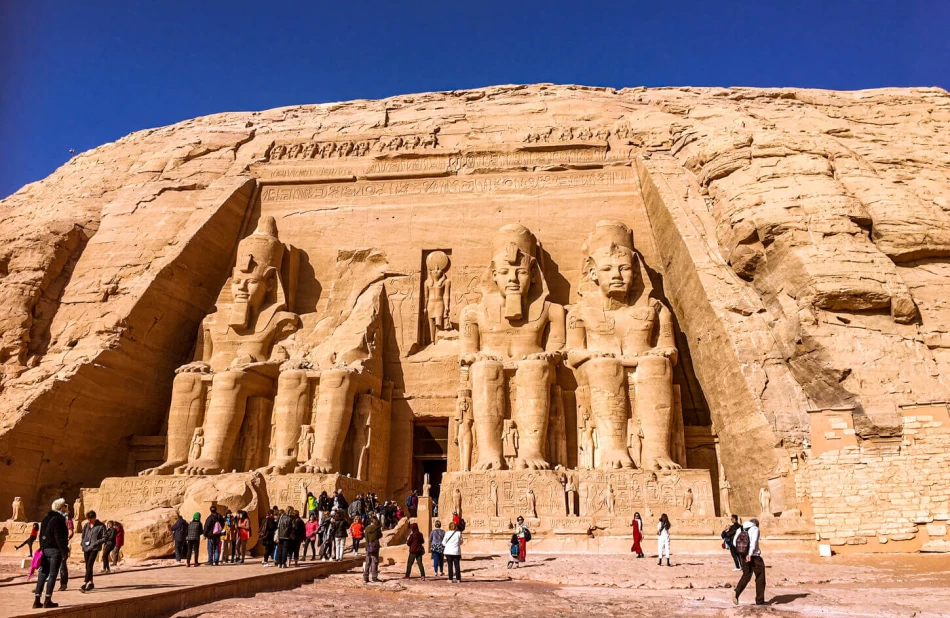
Start with the giant. As you approach the Great Temple of Ramses II, four colossal statues of Ramses II, each about 20 metres high (66 feet), rise from the Nubian rock. The pharaoh wears the Pschent, the double crown of Upper and Lower Egypt, with smaller royal figures carved around his feet.
Step inside the Great Hypostyle Hall, where past towering pillars and dramatic reliefs bring Ramses II’s reign to life, including scenes of the Battle of Kadesh against the Hittites.
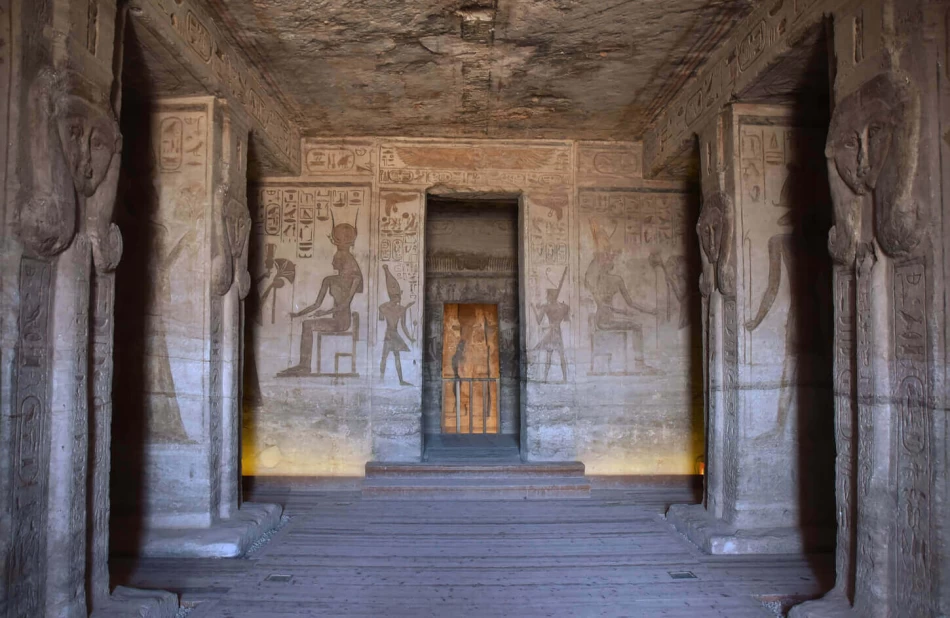
Go deeper into the mountain, past towering pillars and battle scenes, until the light fades and the sacred sanctuary comes into view. Here, four figures sit in eternal silence: Amun-Ra, Ra-Horakhty, Ptah, and the deified Ramses II.
💡 Insider Reveal - The Sun Festival: On February 22 and October 22, sunlight travels deep through the temple to illuminate three of the four figures twice a year, while Ptah, associated with the underworld, remains in darkness. This remarkable solar phenomenon reflects the temple’s precise astronomical alignment.
Four colossal statues of Ramses II
2
Temple of Queen Nefertari
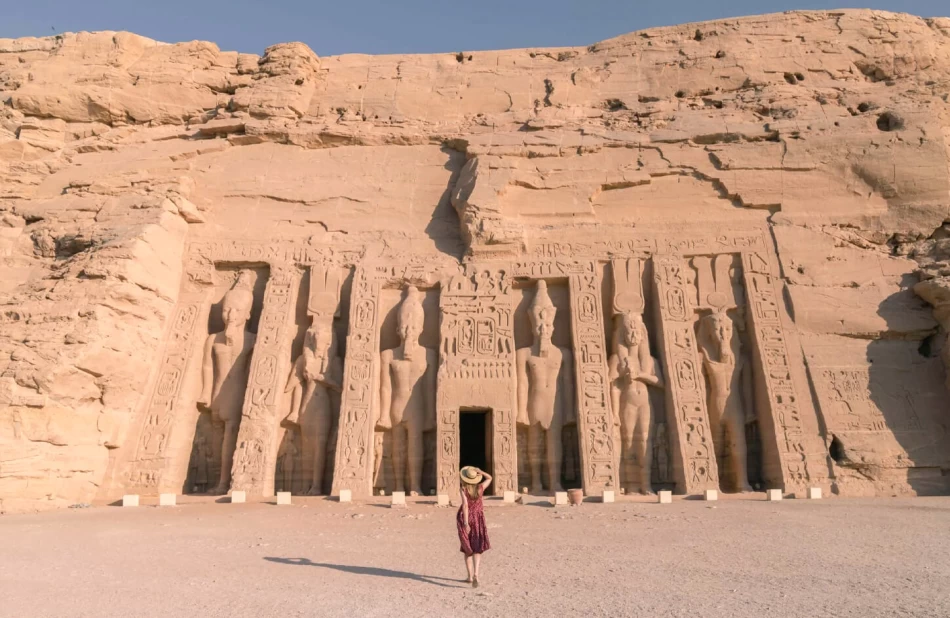
Just steps from Ramses II’s temple, discover a façade with a different kind of grandeur. The smaller Temple of Queen Nefertari, also known as the Temple of Hathor, was commissioned by Ramses II for his royal wife and dedicated to both Nefertari and Hathor, the goddess of love, motherhood, music, and fertility.
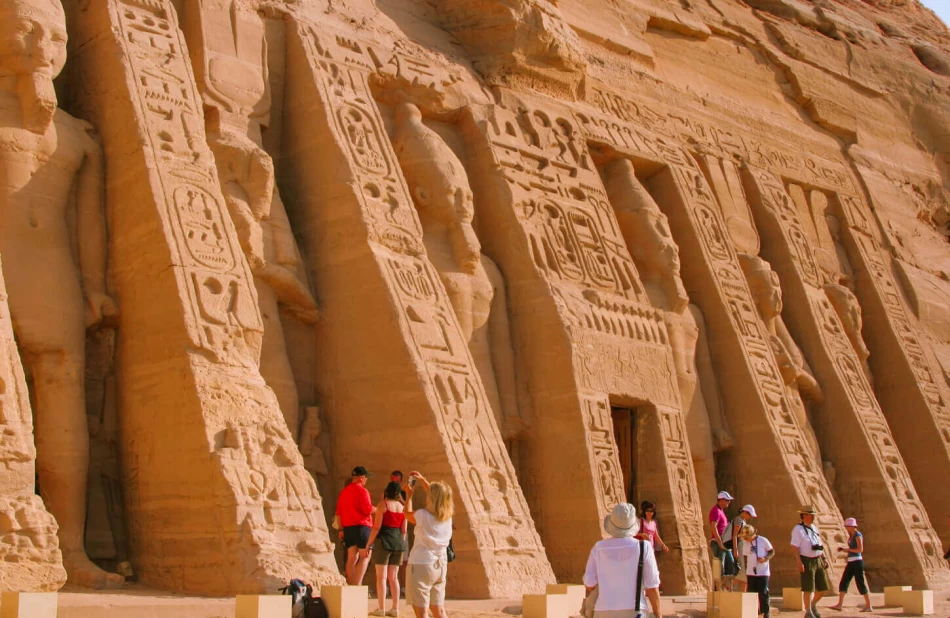
Six colossal statues emerge from the rock face: four of Ramses II and two of Nefertari. Step inside to find elegant Hathor-headed columns and beautifully carved reliefs showing Nefertari making offerings to the gods.
Temple of Queen Nefertari
Back to your hotel
Return transfer at the end of your day — hotel, Nile cruise dock or the airport.
What's included
Everything's taken care of
Included
Hotel pickup and drop-off.
Air-conditioned vehicle transportation.
Expert Egyptologist guide during your tour.
Entrance fees for all sightseeing are included.
All service charges and taxes are included.
Entrance fees for all sightseeing are included.
Not included
Personal costs.
Extra activities.
Tipping.
The tour package excludes everything that isn't included in the itinerary.
Prices
One rate all year — the more of you, the less each pays
Group sizePrice per person
Solo travellerPrivate tour for oneUS$ 180/ person
2–4 travellersUS$ 95/ person
5–8 travellersUS$ 80/ person
9–14 travellersUS$ 75/ person
Prices may vary based on the season and group size.
Rates typically cover entrance fees, transportation, and guided tours.
The package includes standard costs but extra charges will occur for optional activities that are excluded from the package.
Children's discounts may be available depending on age and operator policy.
Prices are usually quoted in USD or EGP and may be subject to exchange rate fluctuations.
Optional extras
Add these if you have the appetite
Abu Simble Tour by land
Discover the awe-inspiring temples of Abu Simbel, a UNESCO World Heritage site and one of Egypt's most iconic landmarks. This tour offers the flexibil...
US$ 80 per person
Abu simble temple by flight
Discover the awe-inspiring temples of Abu Simbel, a UNESCO World Heritage site and one of Egypt's most iconic landmarks. This tour offers the flexibil...
US$ 370 per person
Essential information
Before the morning of your tour
We’ll pick you up from your hotel in the morning in a private vehicle. Simply let us know your preferred pickup time when you book. The evening before your trip, we’ll share your Egyptologist guide’s name and contact number, so you know exactly who will meet you.
Comfortable closed-toe walking shoes: the site involves walking over uneven ground.
Hat, sunglasses, and sunscreen: the Nubian sun can be strong, especially around the temples.
Water bottle: stay hydrated during the journey and while exploring the site.
Cash for tips: if you’d like to tip your guide or driver.
Camera or phone: you’ll want to capture the colossal façades and Nubian landscape.
Photography with your phone or camera is free at both Abu Simbel Temples.
Both temples are accessible by vehicle, with some walking along stone pathways and uneven surfaces inside the site.
Free cancellation up to 24 hours before pickup. No prepayment is taken to reserve the date; you settle with your guide on the day.
Good to know
Day tour FAQs
You choose your pickup time when you book. We recommend leaving very early (4 or 5 AM) to reach the temples before the midday heat and crowds.
The Abu Simbel Temples were relocated between 1964 and 1968 to save them from being submerged by the rising waters of Lake Nasser following the construction of the Aswan High Dam. An international campaign led by UNESCO carefully cut the temples into large blocks and reconstructed them on higher ground nearby, preserving the monuments for future generations.
Queen Nefertari died around 1255 BCE, during the 24th or 25th year of Ramses II’s reign. Ramses II continued to rule Egypt for several decades and died around 1213 BCE, after a reign of roughly 66 years. Nefertari’s tomb, QV66 in the Valley of the Queens, is one of the most beautifully decorated royal tombs in ancient Egypt.
Yes. We can arrange a private journey to Abu Simbel from Aswan or coordinate the visit as part of a longer Egypt itinerary, including travel from Cairo, Luxor, and other destinations. We can also build Abu Simbel into a tailor-made Egypt tour.
Yes, Abu Simbel is suitable for children. The colossal statues, temples and ancient stories can be especially engaging for younger travelers. The journey from Aswan is long, so comfortable clothing, water, and sun protection are recommended.
Some walking is required, mainly along stone pathways between the parking area and the temples and while exploring the temple interiors. Comfortable closed-toe shoes are recommended.
Yes. Both Abu Simbel temples can be reached by vehicle, with walking required once you arrive at the site.
Yes. Photography with a phone or camera is free at both temples. You can capture the colossal statues, detailed reliefs, and temple interiors without paying a separate photography fee.
The Abu Simbel Temples are famous for:
The colossal statues of Ramses II; two massive rock-cut temples for King Ramses II and his wife, Queen Nefertari, about 280 km southwest of Aswan.
Abu Simbel is also known for its Sun Festival, when sunlight reaches the inner sanctuary twice a year
The temples were relocated in the 1960s to save them from the rising waters of Lake Nasser.
Yes. The pickup and drop-off are included from any hotel or Nile cruise in Aswan at no extra cost.
Yes. Entrance fees to both Abu Simbel temples are included in the tour price, so there are no extra admission costs on the day.
The drive to the Abu Simbel Temple from Aswan takes about 3.5 to 4 hours each way, totaling around 7 to 8 hours for the round trip.
Wear light, breathable clothing that covers your shoulders and knees, along with comfortable closed-toe walking shoes. A hat, sunglasses, and sunscreen are also useful for the strong Nubian sun.
There are two main temples at Abu Simbel: the Great Temple of Ramses II and the Temple of Queen Nefertari, also known as the Temple of Hathor. Ramses II commissioned the Great Temple for himself and the smaller temple for his Great Royal Wife, Nefertari.
What travelers say
Stories from real explorers
Don't take our word for it — here's what our guests share after their day with us.
Hoda was an amazing guide, sharing with us her incredible knowledge about the history and culture of Egypt. She is a warm and caring person, helping us meet our "wish-list' items on this trip!!
K
K E Bat
Group
★★★★★Tripadvisor
I highly recommend Hoda. She is a wonderful guide for English speaking travelers. Her knowledge and enthusiasm for Egyptian history and culture is infectious. She made my tour of Egypt a trip of a lifetime.
VA
Valerie S
Group
★★★★★Tripadvisor
Hany is a knowledgeable, kind and thoughtful guide. He can tailor a personalized tour to what you want to see, or can plan an entire itinerary. He is incredibly responsive and dependable. Hands down the best way to see E...
Aswan is a city that has a plethora of sightseeing places, blessing the visitors with an extraordinary combination of history, culture, and nature. Th...
Begin your day trip in Aswan to Edfu and Kom Ombo, and visit two of the most astonishing temples in Egypt. Take a trip through history and get to know...
Experience the incredible Philae Sound and Light Show, which is one of the best Aswan excursions and one of the most highly recommended Aswan things t...