Blue Hole Dahab: Diving, Snorkelling & How to Visit (2026)
A 100m+ deep Red Sea sinkhole and coral wall, about 10km north of Dahab — world-famous for diving, and quietly...
Read article
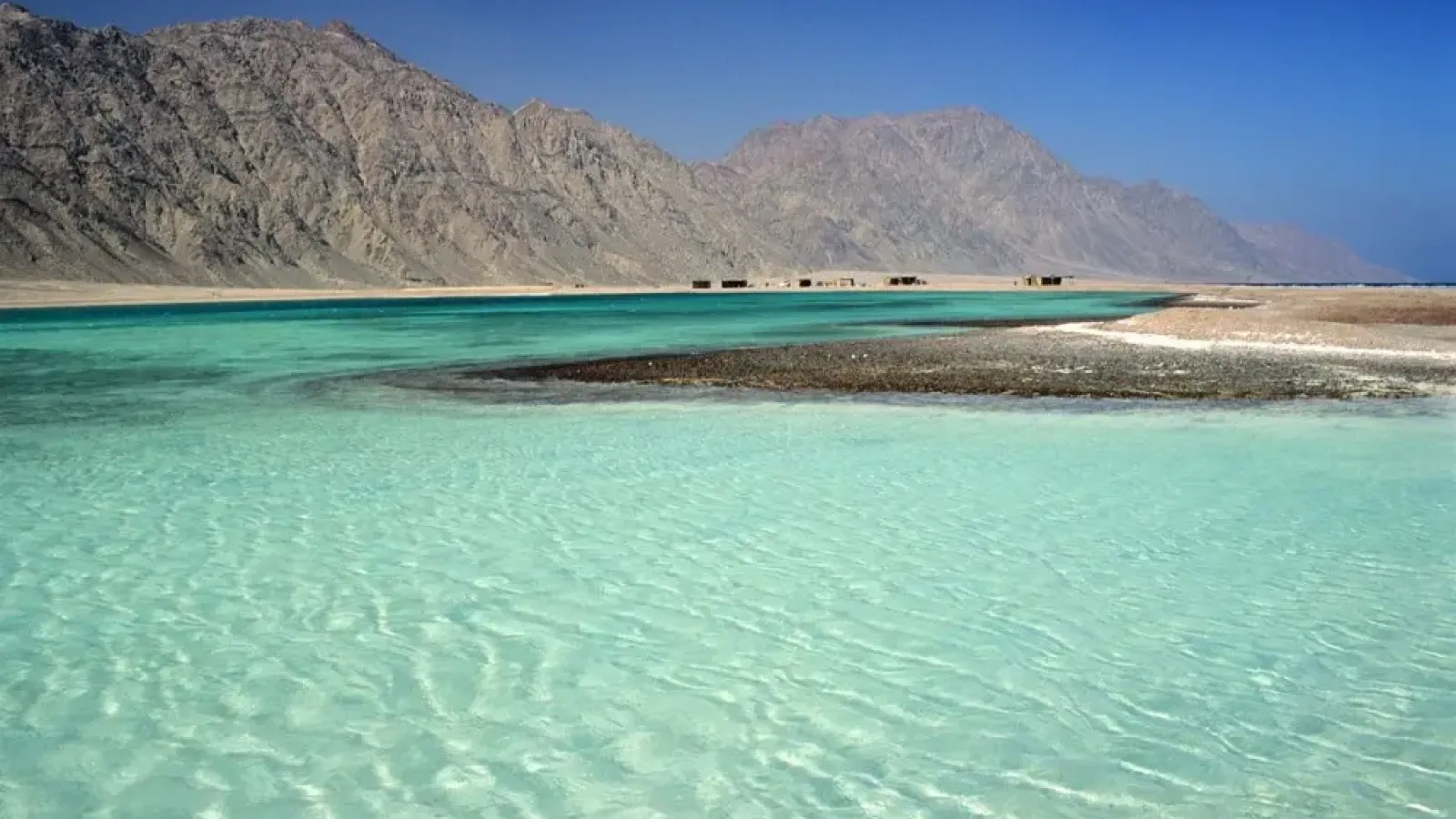
A remote, shallow turquoise lagoon on the northern Sinai coast beyond the Blue Hole — flat, warm water framed by desert mountains, reached only by 4x4 and a short boat ride or walk. The Blue Lagoon is an off-grid stretch of glassy, waist-deep water ringed by reef and Bedouin camps, well north of Dahab past Ras Abu Galum. Its flat, sheltered shallows make it one of Egypt's best beginner and freestyle kitesurfing spots, while the reef edge is easy snorkelling. There's no road to the water, no electricity and no phone signal — that isolation is exactly the point.
The Blue Lagoon is where we send guests who want Dahab at its wildest. It sits far up the northern coast, well beyond the Blue Hole and past the Ras Abu Galum reserve, where the Sinai mountains drop straight into a sheet of turquoise. There is no road to the lagoon itself — you rattle north by 4x4, then cross the last stretch by boat or on foot. What waits is a broad, shallow, mirror-flat lagoon, a scatter of Bedouin huts, no electricity and no phone signal. Kitesurfers know it as one of Egypt's best flat-water spots; everyone else comes to snorkel, swim and switch off completely.
The Blue Lagoon is a natural, reef-sheltered lagoon on the far northern coast of the Gulf of Aqaba, roughly 35 kilometres north of Dahab. A long sandbar and coral reef hold back the open sea, leaving a wide expanse of shallow, warm water that glows an almost unreal turquoise against the bare red mountains behind it. Much of the lagoon is waist-to-chest deep, calm and clear, with a reef line along its seaward edge. A small Bedouin settlement lives here seasonally, running simple camps that serve tea, fresh fish and shade. It is genuinely remote — there is no paved road, no mains power and no mobile coverage, so what you get is water, desert, and quiet.
Tell us when you can travel and we'll suggest the ideal route and season — usually within the hour.
Chat with a local expertFor kitesurfers the Blue Lagoon is the headline act. The reef and sandbar flatten the water almost completely, so instead of open-sea chop you get a huge, standing-depth, flat-water playground — ideal for learning, for first transitions, and for freestyle riders who want butter-smooth conditions for tricks. Because so much of the lagoon is shallow enough to stand in, beginners can practise a body drag and water-start without being swept out. Dahab's steady thermal wind, funnelled down the gulf, blows reliably through the warmer months, and camps at the lagoon rent gear and run lessons — flat shallow water that pulls experienced riders up from town. Dahab day trips
Local tip: the wind is strongest and most reliable from roughly April to September, and it usually builds through the afternoon. If kiting is your main goal, plan to be on the water midday onwards, and go with a camp that provides a rescue boat — the flat water is forgiving, but you're a long way from town.
You don't need a kite to love the Blue Lagoon. The inner lagoon is a superb, safe place to swim and float — warm, shallow and sheltered, with none of the current or depth that intimidates nervous swimmers. Along the seaward reef the snorkelling is quietly excellent, with hard and soft corals and reef fish in clear water, and far fewer people than the sites near town. It pairs naturally with Ras Abu Galum, the protected Bedouin reserve just to the south that most trips pass through, where the reefs are equally pristine. For a fuller water day, our snorkelling guide maps the best spots along this coast. Ras Abu Galum Snorkelling in Dahab guide
Half the appeal of the Blue Lagoon is what it doesn't have. There's no resort, no road noise and no signal — just a handful of Bedouin camps built from palm and driftwood, with shaded chill huts, cushions and hammocks strung where the desert meets the water. Drop in for a lunch of grilled fish, rice and sweet tea, laze away an afternoon between swims, or stay overnight in a basic hut under a sky thick with stars. It's rustic by design: simple food, cold-water washing and no plumbing. For travellers worn out by resort Egypt, that off-grid rhythm is the whole reason to come.
We'll tell you honestly what the weather and crowds are really like for your travel dates.
Chat with a local expertThere's no way to simply drive to the water's edge, which is what keeps the Blue Lagoon so unspoiled. The standard route is a day trip from Dahab: a 4x4 heads north for around an hour to ninety minutes over rough desert track to a drop-off near Ras Abu Galum, and from there you finish by a short local boat ride, a camel, or a twenty-to-thirty-minute walk along the shore. Because the logistics — the track, the boat, the Bedouin arrangements — are fiddly to organise alone, the easiest option by far is a guided excursion with hotel pickup, the 4x4 transfer and lunch at a camp. Browse our Dahab day tours to have the whole day sorted. Dahab day tours
Be aware this is a proper little expedition, not a quick beach stop — between the drive, the boat or walk and time in the water, most visitors make a full day of it, often combined with Abu Galum. Overnight camp stays are popular with kitesurfers who want two days on the flat water. Whichever you choose, go with people who know the route.
★ Want the Blue Lagoon sorted for you? Our Dahab day tours handle the hotel pickup, the 4x4 run up the coast and the boat or walk in to the lagoon — plus lunch at a Bedouin camp. You just bring your swimmers. See our Dahab day tours Dahab day tours
The Blue Lagoon is enjoyable most of the year thanks to Dahab's mild climate, but the season shapes what you do. For kitesurfing, the windy months of April to September are prime, with warm air and reliable afternoon thermals. For swimming, snorkelling and pure relaxation, spring (March–May) and autumn (September–November) are the sweet spot — hot but not brutal, with the sea around 24–27°C. Summer is fierce on land but glorious in the water; winter is quiet and calm, with a wetsuit welcome from December to February. For the wider month-by-month picture, see our best time to visit Egypt guide. Best time to visit Egypt
It suits kitesurfers of every level chasing flat, shallow water, confident and nervous swimmers alike who want a safe warm lagoon, and anyone happy to trade comfort for isolation and disconnect completely. It suits less well those short on time, since it eats most of a day, and anyone expecting resort facilities or easy road access. Come for the flat water, the reef and the quiet, accept the rustic edges, and the Blue Lagoon is one of the most memorable days on the whole Sinai coast.
The Blue Lagoon slots neatly into a wider Dahab trip. Most people reach it through Ras Abu Galum, so pairing the two is natural, and the Blue Hole — the world-famous sinkhole ten kilometres north of town — makes an easy separate day for snorkellers and divers. Back in Dahab, our things to do in Dahab guide rounds up the Lighthouse and Eel Garden reefs, Assalah's laid-back cafés and desert trips, while our where to stay in Dahab guide helps you pick a base for it all. And if you'd rather have the whole Sinai leg built around your dates and pace, we can tailor a private itinerary. Blue Hole Dahab Things to do in Dahab Where to stay in Dahab Tailor-made Egypt tours
★ Turn the Blue Lagoon into a full Red Sea holiday Our Red Sea packages combine Dahab's lagoons and reefs with Sinai's mountains, desert and coast — comfortable hotels, transfers and guides all handled. Explore our Red Sea travel packages Red Sea travel packages
 Red Sea Attraction
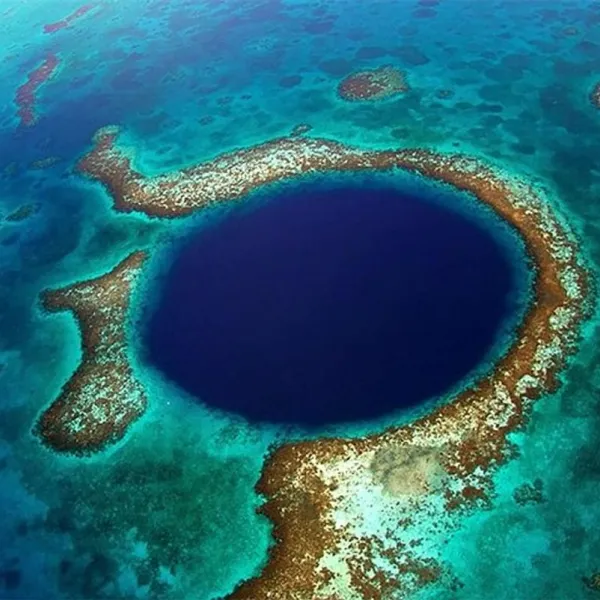
 A 100m+ deep Red Sea sinkhole and coral wall, about 10km north of Dahab — world-famous for diving, and quietly...
 Red Sea Attraction
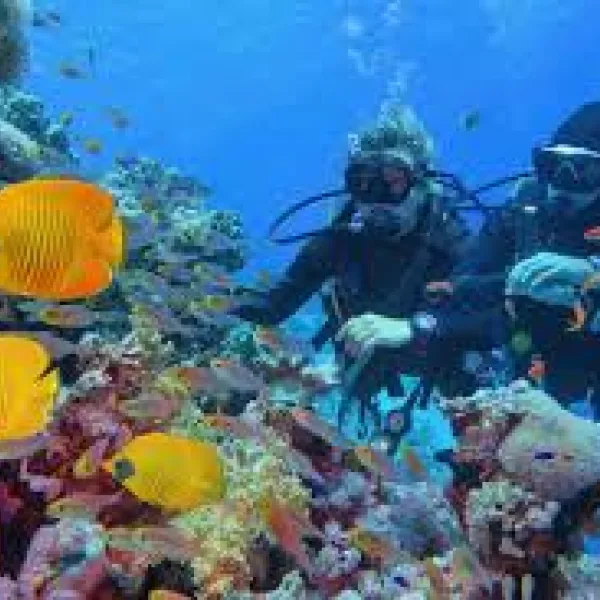
 Ras Mohammed, the Thistlegorm wreck and the Straits of Tiran are the headline dives — world-class reefs on Sha...
 Red Sea Attraction
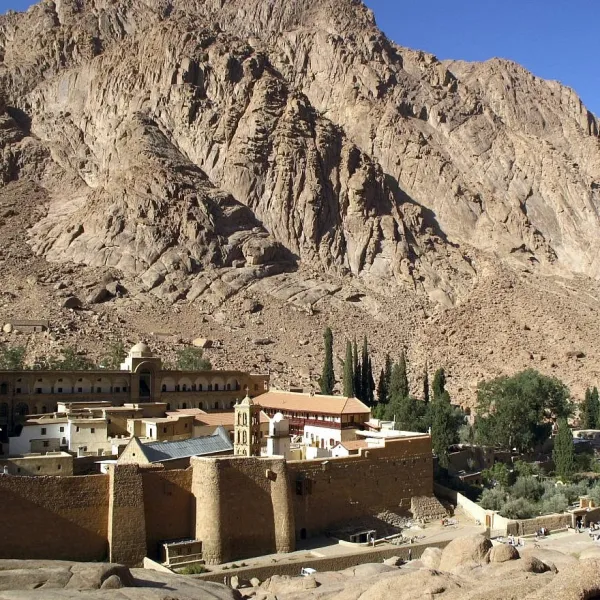
 The 2,285m sacred peak in South Sinai where Moses is said to have received the Ten Commandments — climbed at n...
Get our best Egypt travel tips and itineraries in your inbox — join our travel list.