Best Dive Sites in Sharm El Sheikh: Top Reefs & Wrecks (2026)
Ras Mohammed, the Thistlegorm wreck and the Straits of Tiran are the headline dives — world-class reefs on Sha...
Read article
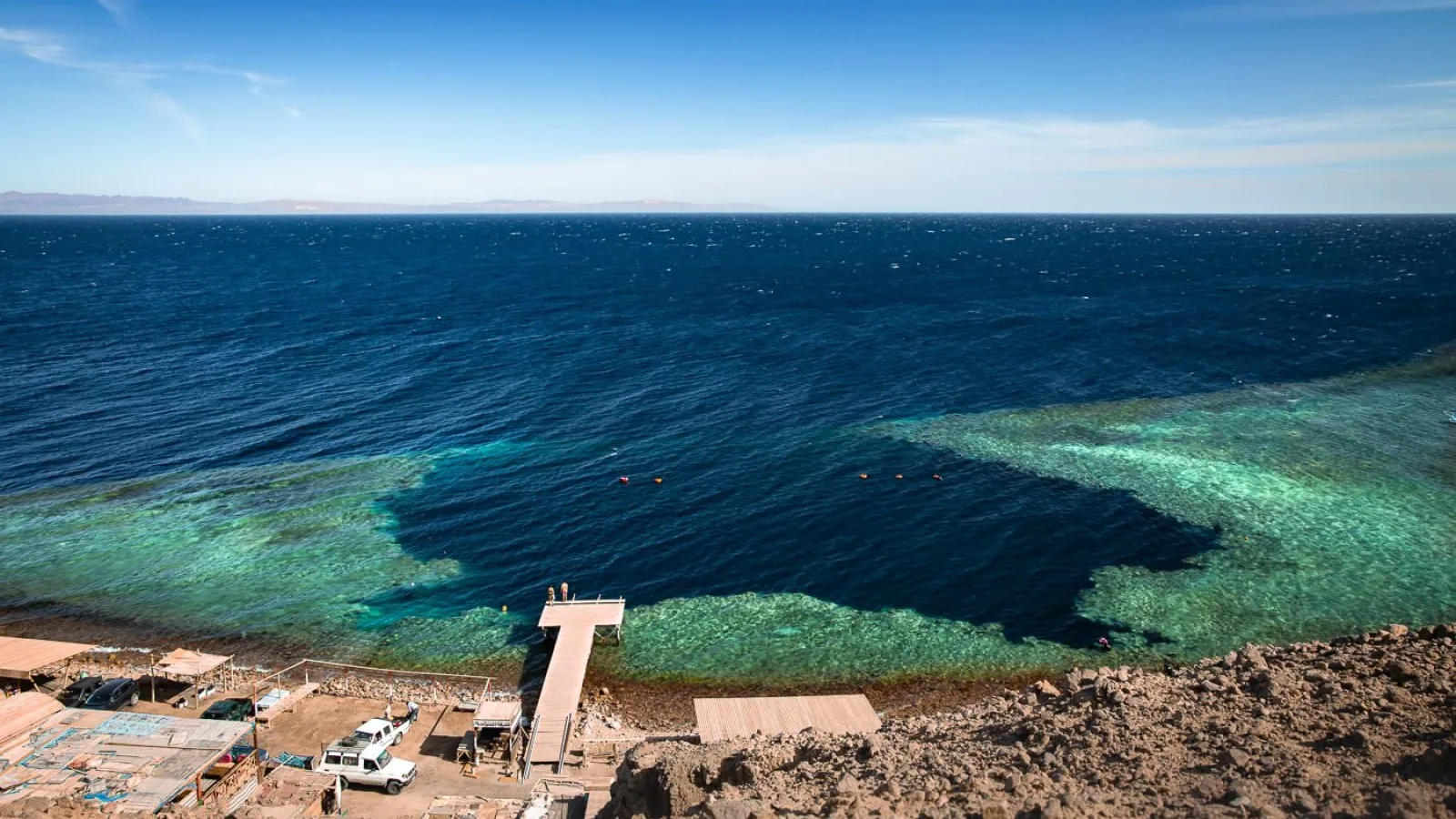
A 100m+ deep Red Sea sinkhole and coral wall, about 10km north of Dahab — world-famous for diving, and quietly brilliant for snorkelling. The Blue Hole is a near-perfect circular sinkhole dropping past 100 metres just metres from the shore. Snorkellers float safely over a shallow, coral-fringed lip and stare down into the deep blue; certified divers explore a vertical reef wall. Its notorious deep tunnel, the Arch, is for technical experts only — but you don't need to go anywhere near it to have one of the best water days in Sinai.
We run guests up to the Blue Hole most weeks of the year, and it still gets a reaction every time — that first look over the reef edge, where a shallow, sunlit coral garden simply falls away into bottomless blue. It sits about ten kilometres north of Dahab down a rough coastal track, a cluster of simple Bedouin cafés with the Sinai mountains behind and Saudi Arabia across the water. The Blue Hole has a big, slightly scary reputation as a dive site — but it's also one of the safest, easiest places to snorkel on the whole Red Sea coast. This guide covers both sides honestly.
The Blue Hole is a submarine sinkhole — a roughly circular shaft in the reef that plunges past 100 metres, right by the shoreline. A shallow coral saddle, the reef lip, separates it from the open sea, so from the surface you see bright turquoise over the coral, then a sharp line into deep navy. Around 56 metres down, a natural tunnel called the Arch cuts through the reef into the open sea — the feature that made the site legendary among technical divers. For everyone else the appeal is simpler: warm, clear, sheltered water, healthy coral on the rim, and clouds of reef fish and the occasional turtle, all without going deep.
Tell us when you can travel and we'll suggest the ideal route and season — usually within the hour.
Chat with a local expertSnorkelling is where most visitors are pleasantly surprised. You don't swim across the deep hole at all — you snorkel along the shallow coral edge that rings it, in a couple of metres of water, with the drop-off to your side. Entry is easy from the shore near the cafés, the water is calm and glassy, and visibility regularly runs 20–30 metres. Drifting along that reef wall, watching the coral fall into the abyss beneath you, is one of Egypt's best snorkelling experiences, and it suits confident swimmers of most ages. To build it into a fuller Dahab water day, our dedicated guide covers the best spots. Snorkelling in Dahab guide
Local tip: stay on the reef-lip side and don't try to free-dive into the hole to "see how deep it is." The shallow edge has all the colour and life; the deep centre is empty water and where people get into trouble.
For certified divers, the Blue Hole offers two very different experiences. The everyday one is a straightforward recreational dive along the outer reef wall — a vertical coral face dropping into the blue, dived within normal limits (18–30m) with a licensed centre, and within reach of any Open Water or Advanced diver. The other is the Arch: the deep tunnel at around 56 metres connecting the hole to the open sea. This is technical, deep, overhead-environment diving that needs specific training, mixed gas and experience — emphatically not a recreational dive, and no reputable centre will take an unqualified diver through it. Scuba diving in Egypt
The honest part: the Blue Hole is often called one of the world's most dangerous dive sites, and memorial plaques on the cliff remember divers who died here — almost all attempting the Arch beyond their limits. That danger is real, but almost entirely confined to unqualified deep dives on the Arch. Snorkelling the reef edge and diving the outer wall with a guide are safe activities enjoyed by thousands each season. Choose a licensed centre, respect your certification, and the Blue Hole is a joy, not a hazard.
Just north of the Blue Hole is a second entry point, the Bells — a narrow vertical crack in the reef that divers descend like a chimney, named for the ringing sound tanks make against the walls. The classic "El Bells to Blue Hole" route enters at the Bells, drifts south along the spectacular outer reef wall at recreational depth, then crosses the saddle back into the Blue Hole. It's one of Sinai's best wall drift dives and stays within recreational limits — all the drama, none of the Arch's risk. Ask your dive centre about it if you're certified and want the signature experience done safely.
We'll tell you honestly what the weather and crowds are really like for your travel dates.
Chat with a local expertThe Blue Hole is an easy half-day or day trip from Dahab. It's about ten kilometres north of town along a rough coastal road, reached by 4x4, jeep or taxi. The simplest option is a guided trip that includes hotel pickup, transport over the track, and your snorkelling or diving arranged on arrival — you just show up and enjoy the water. We run Dahab excursions pairing Blue Hole snorkelling with a desert quad-bike ride, for a great full day out. Browse our Dahab day tours, or jump straight to the combined Blue Hole snorkelling and quad-biking safari. Dahab day trips Blue Hole snorkelling & quad-biking safari
You can also visit from Sharm El Sheikh: it's a longer day — roughly a 1.5–2 hour drive each way plus a checkpoint crossing — usually run as a full-day excursion with an early start. If you're based in Sharm, see our Sharm El Sheikh day tours for Blue Hole and wider Sinai options. Sharm El Sheikh day tours
★ Want the Blue Hole sorted for you? Our Dahab day tours include hotel pickup, the drive up the coast, and gear and guide arranged on arrival — no logistics to worry about. See our Dahab day tours Dahab day tours
The Blue Hole is diveable and snorkellable year-round thanks to Dahab's mild climate and sheltered water. The most comfortable months are spring (March–May) and autumn (September–November), when the air is warm but not fierce and the sea sits around 24–27°C. Summer is hot on land but excellent in the water; winter is quieter, with a wetsuit welcome from December to February when the sea dips to about 21–22°C. For a month-by-month view, see our best time to visit Egypt guide. Best time to visit Egypt
It suits more people than its fearsome name suggests: confident snorkellers and families with older children get a safe, shallow reef edge, while certified divers get a world-class wall dive and the classic El Bells drift. It doesn't suit non-swimmers entering unsupervised, or anyone tempted to free-dive the hole without training. Come for the reef edge and the wall, leave the Arch to the specialists, and the Blue Hole is one of the most rewarding stops on the Red Sea coast.
The Blue Hole pairs naturally with the rest of Dahab. Many people combine it with Ras Abu Galum, a protected Bedouin reserve up the coast reached by camel or boat, for a wilder second snorkelling stop. Back in town, our things to do in Dahab guide rounds up the Lighthouse and Eel Garden reefs, Assalah's cafés and desert trips, while our where to stay in Dahab guide helps you pick a base. For divers, the scuba diving in Egypt guide sets the Blue Hole alongside Sharm, Hurghada and the deep south. And if you'd rather have a private itinerary, we can tailor one to your dates and pace. Ras Abu Galum Things to do in Dahab Where to stay in Dahab Tailor-made Egypt tours
★ Turn the Blue Hole into a full Red Sea holiday Our Red Sea packages combine Dahab's reefs with Sinai's mountains, desert and coast — comfortable hotels, transfers and guides all handled. Explore our Red Sea travel packages Red Sea travel packages

Join an unforgettable Dahab Day Tour that combines a desert adventure and Red Sea beauty. Quad biking, snorkeling at the Blue Hole, and relaxing on th...
 Red Sea Attraction
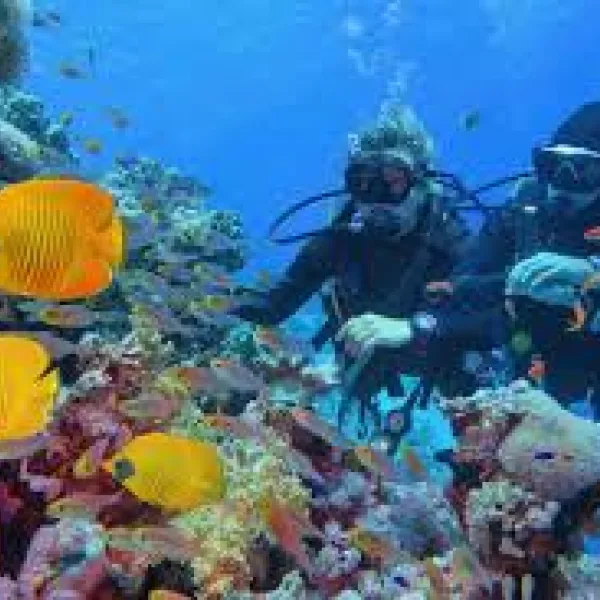
 Ras Mohammed, the Thistlegorm wreck and the Straits of Tiran are the headline dives — world-class reefs on Sha...
 Red Sea Attraction
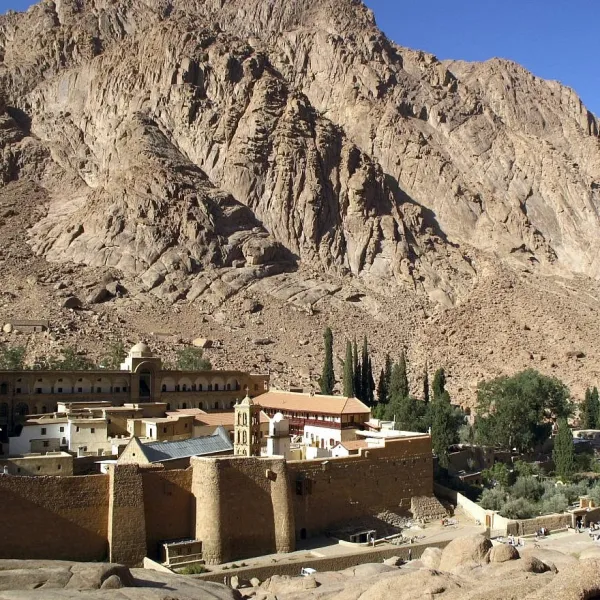
 The 2,285m sacred peak in South Sinai where Moses is said to have received the Ten Commandments — climbed at n...
 Red Sea Attraction
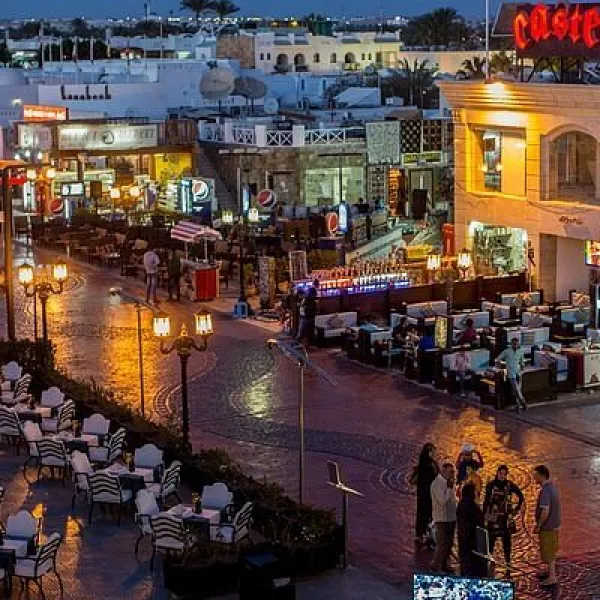
 Naama Bay is Sharm el-Sheikh's main tourist hub — a beachfront promenade packed with hotels, restaurants, bars...
Get our best Egypt travel tips and itineraries in your inbox — join our travel list.